
Diet
Eating a healthy and balanced diet helps your digestive system work well and can reduce your risk of bowel cancer. This page provides information about different types of food and the simple changes you can make to improve your bowel health.
Here are some tips to help you eat a healthy and balanced diet:
- Eat foods that are a source of fibre. Like wholegrain varieties of bread, rice and pasta
- Eat at least five portions of vegetables and fruit every day
- Eat more pulses, such as beans and lentils
- Eat some fish, chicken, eggs and tofu, but limit red meat and avoid processes meat
- Drink milk and eat other diary foods, but choose low sugar and fat options
- Choose unsaturated oils and spreads instead of butter and use small amounts
- Avoid food and drinks high in fat or sugar, such as sweets, cakes, crisps and fizzy drinks
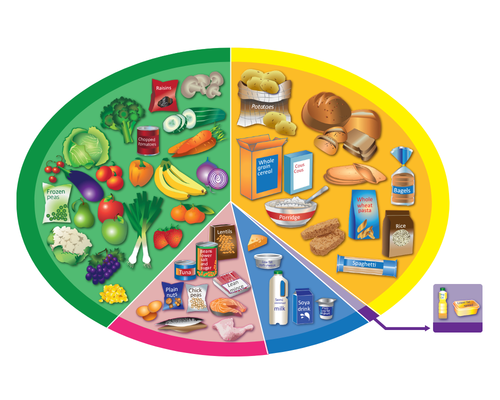
The NHS Eatwell Guide shows you how much of your diet should come from each food group. This includes everything you eat during the day, including snacks and drinks.
Fibre
Fibre is an important part of a healthy diet and helps reduce your risk of bowel cancer. Not eating enough fibre is linked to over 1 in 4 cases of bowel cancer.
Keep hydrated
Fibre asborbs water, so it’s important to drink plenty of fluids to stop dehydration. Aim to drink 6 to 8 glasses (1.6-2 litres) of fluid every day. Water and low-fat milk are great choices.
Avoid sugary drinks such as cola, lemonade, fruit squash with added sugar and fruit juices. Limit fruit juice to one small glass (150ml) of fruit juice per day.
Getting your 5 A Day
As well as containing fibre, vegetables and fruit may also help to protect against bowel cancer because they contain antioxidants. Antioxidants are substances that help to delay or stop cell damage.
Eating five portions of vegetables and fruit a day forms part of a healthy, balanced diet. Here are some ideas to help you get your 5 A Day:
Breakfast
- Add a banana, or any other fruit you like, to your cereal or porridge
Lunch
- Try making a vegetable soup. Most vegetables work well, and it’s a good way to use up any leftovers in your fridge
- Include sliced cucumber and tomato in your sandwiches
Dinner
- Include some chopped up carrots and peppers in your pasta sauce
- Add a side salad to any meal
Frozen, juiced, canned and dried fruit and vegetables all count towards your 5 A Day. Beans, peas and lentils all count too and are a key part of a balanced diet.
Fruit and vegetables can also make great snacks. A portion of fruit or vegetables is 80g. Here are some examples of one portion:
- three celery sticks
- seven cherry tomatoes
- seven strawberries
- an apple, orange or banana
- three dried prunes
Protein
We need protein in our diet to help our body repair cells and make new ones. Good sources of protein include chicken, fish, eggs, peas, beans, tofu and lentils.
Red meat is also a good source of protein, however evidence shows that eating lots of it can increase your risk of bowel cancer. This includes beef, pork, lamb and goat.
If you eat red meat, try to cut down to 70g or less of red meat (cooked weight) each day to reduce your risk. If you eat more than 70g one day, try to eat less on the next day, or have a meat free day that week.
How much is that?
- One portion of spaghetti bolognese contains about 140g of red meat and one medium pork chop is about 90g of red meat. Try using chickpeas or beans to replace some or all the meat in bolognese or chili con carne recipes. As well as being a great source of protein, they are high in fibre too.
Research shows that eating processed meats is linked to an increase in the risk of developing bowel cancer. These are meats that have been preserved by smoking, curing, salting or adding preservatives. This includes bacon, ham, salami and sausages. It’s best to avoid eating processed meats as much as possible.
Dairy
Milk and dairy products are part of a healthy balanced diet. They are good sources of protein and calcium. There is growing evidence that calcium may reduce your risk of bowel cancer. Things like milk, cheese and yogurt are high in calcium. Dairy products can also be high in fat so try to choose skimmed or semi-skimmed and low fat varieties to help you maintain a healthy weight.
If you aren’t able to eat dairy, you can also get calcium from calcium-fortified dairy alternatives, such as calcium-fortified oat milks, almond milks or soya milks. Other sources include leafy greens like kale.
Find out more at nhs.uk/live-well.

Updated: May 2026

We're accredited as a Trusted Information Creator by the Patient Information Forum. This means the way we write our resources has been independently assessed as health information you can trust.