
Fibre
Fibre is an important part of a healthy diet and helps reduce your risk of bowel cancer. Not eating enough fibre is linked to over 1 in 4 cases of bowel cancer.
There are different types of fibre:
- Soluble fibre helps to keep poo soft, making it easier to pass through the bowel. Good sources of soluble fibre include oats, barley, beans, peas, lentils, chickpeas, apples and carrots.
- Insoluble fibre bulks up poo and helps it move through the bowels more quickly. This may help prevent constipation. Good sources of insoluble fibre include wholegrains such as brown, wheat and spelt as well as nuts, seeds, potatoes in skins and dried figs.
- Most fibre is fermentable, but some fibres ferment more than others. Fermented fibre feeds the good bacteria in your gut. These bacteria produce something called butyrate. This helps the cells of the bowel to stay healthy and reduces the risk of tumours developing. Sources of fermentable include onions, garlic, wheat, oats, beans and peas.
Eating fibre also helps you feel fuller for longer. This can make it easier to stay at a healthy weight.
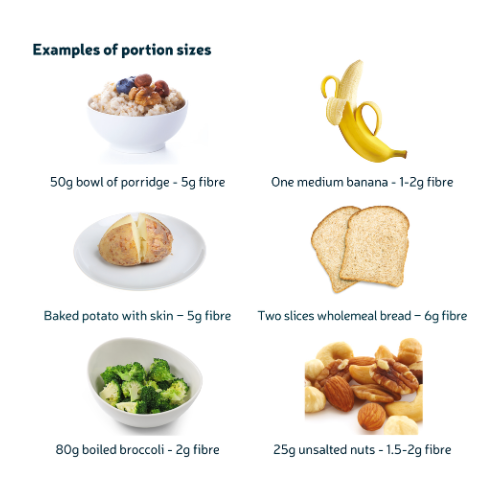
It's recommended that adults aim to eat around 30g of fibre each day.
Tips to increase the amount of fibre in your diet:
- A healthy breakfast containing fibre is a good way to start the day. For example, porridge, wholegrain cereals, or wholegrain toast with a sliced banana
- Beans and pulses such as baked beans, lentils, chickpeas, kidney beans and peas (including frozen peas) are good sources of fibre as well as protein. Try using these in soups, stews, curries and salads for lunch or dinner
- Choose wholegrain varieties of foods, for example brown rice, bread and pasta instead of white varieties
Vegetables, fruit, nuts and seeds are also good sources of fibre. Try apples, berries, apricots, figs, pumpkin and sunflower seeds, carrots, broccoli, parsnips and potatoes in skins.
If you want to increase the amount of fibre in your diet, do it gradually to avoid wind, bloating and stomach cramps. If you have a health condition that affects your digestive system, for example irritable bowel syndrome (IBS) or Crohn's disease, check with your healthcare team before making any changes in your diet.
Updated: May 2026

We're accredited as a Trusted Information Creator by the Patient Information Forum. This means the way we write our resources has been independently assessed as health information you can trust.