
Examining diagnostic pathways for bowel cancer in younger people
Lead researcher: Dr Christina Dobson
Location: Newcastle University
Grant award: £164,790
Dr Dobson is investigating how young people are diagnosed with bowel cancer and the difficulties they can face reaching a diagnosis.
The challenge
Early-onset bowel cancer – bowel cancer in people under the age of 50 – is becoming more common. Rates of bowel cancer in people aged 25-49 have increased by 51% since the early 1990s, while rates in people aged 50 and above have remained stable. Although younger patients are still only around 1 in 20 of the bowel cancer cases in the UK, this rise is concerning.
Younger people are more likely to be diagnosed with more advanced cancer, suggesting something different is happening in this younger group that could delay their diagnosis. Many report having to visit their GP multiple times or being treated for other conditions before being referred for bowel cancer tests.
Bowel cancer is more treatable the earlier it’s caught. It’s important that everyone, whatever their age, can be diagnosed quickly. This project aims to better understand the diagnostic pathways and barriers faced by people with early-onset bowel cancer.
The science behind the project
The researchers, led by Dr Dobson, will talk to patients with early-onset bowel cancer about their experience of being diagnosed, including their awareness of bowel cancer symptoms and risk, GP consultations, specialist investigations and any obstacles they faced along the way.
The team will also talk to healthcare professionals, including GPs, nurses and gastroenterologists, about their perceptions of bowel cancer in younger people, and how the diagnostic pathways work.
Results from both sets of interviews will be used to create a “map” of diagnostic pathways for early-onset bowel cancer, with all the key events from first spotting symptoms until receiving a diagnosis. “Tension points”, moments where delays or problems can occur, will also be marked.
Finally, this map will be used in workshops with patients, healthcare professionals and organisations such as Bowel Cancer UK. These workshops will discuss the tension points along the diagnostic pathways, consider which should be priorities to address and explore potential ways to make improvements.
What difference will this project make?
Addressing the issues in bowel cancer diagnosis for younger people will mean more patients get diagnosed more quickly. This allows treatment to start sooner and gives less time for their cancer to advance.
Enhancing NHS systems to address these tension points could not only improve outcomes for patients, but improve the experience for both patients and healthcare professionals, by reducing delays and frustration.
- For more information see our announcement of the grant
- Information and support for younger people with bowel cancer
- Donate and help make our research possible
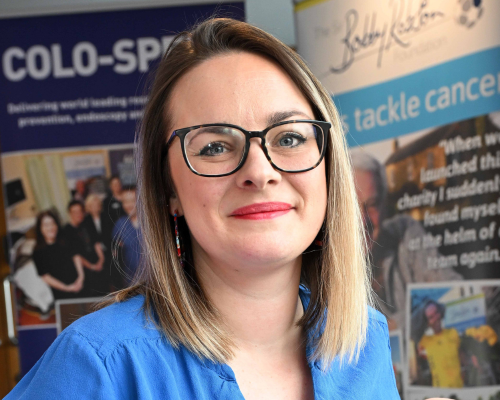
“More people under 50 years old are being diagnosed with bowel cancer in the UK, and around the world. Younger patients not only have to navigate the same tests, diagnoses and treatments as older patients, but it appears that they face additional challenges. These challenges may impact the timing of their diagnosis, or the treatment they receive.
Thanks to the generous funding from Bowel Cancer UK, we’re able to work with people under 50 who have been diagnosed with bowel cancer, as well as the healthcare professionals who care for them. Our goal is to understand the specific challenges experienced by this age group, and how they could be disadvantaging younger patients.
We will use these insights to develop ideas for change, to improve systems, pathways and patient experiences, in collaboration with patients, healthcare professionals and policy makers. This work has the potential to not only improve people’s experiences of being diagnosed with, and treated for, bowel cancer, but in doing so, speed up their care to improve their chances of survival.” - Dr Christina Dobson