
Developing a blood test for cancer risk in Lynch syndrome
Lead researchers: Dr Penelope Edwards
Location: Institute of Cancer Research, London
Grant award: £46,358
Dr Edwards is investigating if a blood test could be used alongside colonoscopies to detect bowel cancer in Lynch syndrome.
The challenge
Lynch syndrome is an inherited condition that increases someone’s risk of several cancers, particularly bowel cancer. People with Lynch syndrome need surveillance (regular check-ups) throughout adulthood, usually through a colonoscopy every two years. Although colonoscopies can find early cancers and remove precancerous growths, they can be disruptive and unpleasant. There’s also increasing pressure on NHS colonoscopy services.
Cancer risk varies among people with Lynch syndrome, so it’s likely that not everyone needs a colonoscopy as often. But at the moment, we don’t have a non-invasive way to assess an individual’s risk to personalise their surveillance.
The science behind the project
When cancer starts to develop, the body’s immune system reacts. Dr Edwards is investigating if these changes to the immune system can be detected in blood samples in people with Lynch syndrome. If they can, this could be used to detect the early development of bowel cancer in Lynch syndrome.
She'll use blood samples donated by people with Lynch syndrome, some of whom have developed cancer and some who haven’t. The project will also compare results from a simple device that can be used to collect a blood sample at home rather than hospital blood tests.
What difference will this project make?
A blood test looking for signs of early cancer development could be a less invasive way to determine risk levels in Lynch syndrome. It would help clinicians to decide which people are at a higher risk and should stay on a more frequent colonoscopy schedule, and which are at a lower risk and can safely have longer gaps between procedures.
A more personalised approach could reduce the physical and emotional burden of repeated colonoscopies, while also easing the demand on NHS services.
-
For more information see our announcement of the grant
-
Read more about Lynch syndrome
-
Donate to help make our research possible
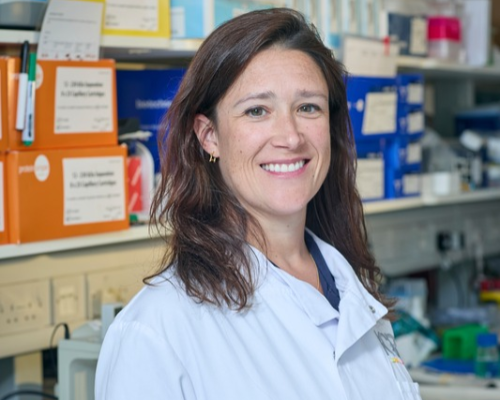
“People with Lynch syndrome undergo lifelong colonoscopy surveillance because of their high risk of bowel cancer. With support from Bowel Cancer UK, we will investigate whether the immune system leaves a detectable signal in blood as cancer develops. We hope this could ultimately help us detect bowel cancer earlier and personalise surveillance, so that some people may need fewer colonoscopies while those at greatest risk can be monitored more closely. I’m incredibly grateful to Bowel Cancer UK for giving me the opportunity to lead this work and take an important step towards establishing myself as an independent researcher in cancer prevention and early detection.”