Detecting DNA from bowel cancer cells using the Faecal Immunochemical Test (FIT)
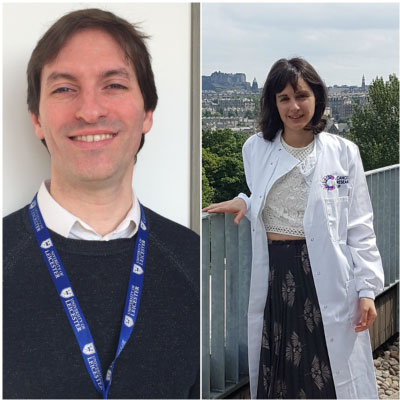
Lead Researchers: Dr Evropi Theodoratou and Dr Alessandro Rufini
Location: University of Edinburgh and University of Leicester
Grant award: £24,582
Dr Theodoratou and Dr Rufini were investigating whether it’s possible to find DNA from cancer cells in poo samples, as a way to improve screening and diagnosis of bowel cancer.
The challenge
Bowel cancer screening is one of the best ways to diagnose bowel cancer at an early stage, when treatment is more likely to be successful. At the moment, the national bowel cancer screening programmes in the UK all use a test that look for hidden blood in poo — the faecal immunochemical test (FIT).
However, blood could be a sign of another health problem and not all polyps or bowel cancers bleed, so testing for blood is not always reliable. The researchers were investigating whether looking for DNA from cancer cells at the same time as testing for blood would be a better option.
The science behind the project
Cells along the bowel (both healthy and cancerous) shed DNA, which can be detected in poo.
The researchers collected FIT samples from patients with bowel cancer symptoms and analysed them in the lab to look for this cell-free DNA. They wanted to see if there’s enough DNA in a FIT sample to look for mutations known to be associated with bowel cancer.
Results
The poo samples taken for FIT didn’t contain enough DNA to look for bowel cancer mutations. While cell-free DNA still has a lot of potential for bowel cancer diagnosis, this means it would been to be collected either from a larger poo sample, or from something else like blood.
What difference will this project make?
Although the poo samples didn't contain enough DNA to be able to look for bowel cancer mutations, the project has moved us closer to developing new ways to diagnose bowel cancer. The results have shown that focusing attention on different ways that samples could be collected or exploring different sample types could provide more useful information.
- Find out more about our current research projects
- Donate and help fund our vital research