Apply for a grant
Our pilot grants funding call is now closed for further applications.
We have now received your applications and will be running through the process as outlined below. We're excited that these grants will give researchers the opportunity to bring a new research idea to life and help create meaningful change for those affected by bowel cancer.
Background
Although bowel cancer is the second biggest cancer killer in the UK, it doesn’t have to be — it is treatable and curable, especially if diagnosed early. Currently, however, fewer than 40% of people are diagnosed at stages 1 and 2 when bowel cancer is most treatable and curable. We want to secure a future where as many people as possible receive a diagnosis at the earliest possible stage.
Remit and eligibility
We’re looking for innovations in bowel cancer diagnosis and screening. It’s not just about discovering new methods — strengthening and enhancing what’s already working is equally important.
Proposals must address one of the areas highlighted in Goal 1 of our Research Strategy, which focuses on removing barriers to early and timely diagnosis:
- Stratify populations based on their risk of developing bowel cancer, with a focus on people with high-risk conditions
- Improve the sensitivity, acceptability, and coverage of bowel cancer screening tests
- Enhance the diagnosis of bowel cancer and how the right treatment options are chosen
Applicants don’t need any preliminary data to apply. These pilot grants will give researchers the means to collect initial data to form the basis of a larger grant application. The pilot project must be designed so that it gives results which show whether a bigger project is possible.
The Lead Applicant must have a strong track record in conducting research and be based in a recognised academic or clinical institution in the UK. They must be in a tenured position, or hold a contract with the host that extends beyond the lifetime of the grant.
Funding guidelines
All costs must be fully justified within the application.
Funding can cover salaries, excluding that of the Lead Applicant. Funding can also cover consumables that are direct costs of the project (including animal costs). We won't cover the costs of tenured staff members on grants, nor those whose salaries are already covered by other means.
If you’re seeking salary costs for the Lead Applicant, please contact our Research Team to discuss this.
We won’t accept applications that are:
- For further education (e.g., MSc/PhD and course fees)
- For Clinical Research Training Fellowships
- For work that will be primarily undertaken outside the UK
- For ‘top up’ funding for specific projects already supported by other funding bodies
- For research without a clear path to clinical impact in the next 5–10 years
Patient involvement
At Bowel Cancer UK, people affected by bowel cancer are at the heart of everything we do, and they help to assess applications we receive to our funding calls. They look at whether the research is relevant to patients and their families, and how lived experience has been incorporated into the project.
Applicants are therefore strongly encouraged to actively involve patient representatives from the outset to help shape and deliver their research project.
If you'd like us to connect you with patient representatives through our Research Network, please complete this request form. Please ensure that you factor in a timeframe of at least four weeks from the date that you submit your request to allow us to connect you with our Network members.
Application and assessment process
All applications must be completed on our online grants management system. If you require a different format of the application form, or an adjustment due to a disability, please email us at [email protected]
Deadline: Applications must be submitted by 11am on Wednesday 18 March 2026.
Triage: We will carry out administrative checks to ensure applications meet the remit and eligibility of the call.
Review by experts and our Lay Review Panel: Eligible applications will undergo international expert review (in line with AMRC guidance), as well as assessment by our patient advocates (a panel consisting of people affected by bowel cancer).
Scientific Advisory Board meeting: Applications will then be assessed by our Scientific Advisory Board in July 2026, who will make recommendations to our Trustees.
Notification: Once the funding recommendations have been approved by our Board of Trustees, we will notify applicants of the outcome of their application in August 2026. We thank you for your patience during this time. All awards are made in line with our terms and conditions.
How to apply
The deadline for applications and any supporting documents to be submitted has now passed.
Contact us
If you have any questions or would like to discuss an application with the Research team, please email [email protected].
To keep up to date about our future funding calls, sign up for grant round notifications.
Application success rates
-
2025 Project grants call: 29%, 14 applications received
-
2024 Project grants call: 25%, 12 applications received
-
2023 Pilot grants call: 55%, 9 applications received

Recently funded projects
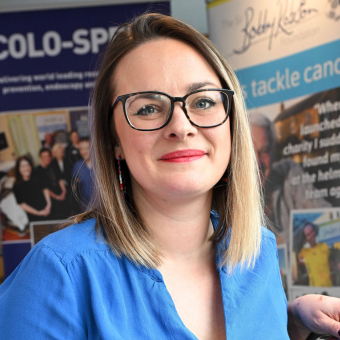
Dr Christina Dobson
Newcastle University
Dr Dobson is investigating how young people are diagnosed with bowel cancer and the difficulties they can face reaching a diagnosis.

Professor Suzanne Scott and Dr Yin Zhou
Queen Mary University of London
Professor Scott and Dr Zhou are analysing data on people who develop bowel cancer in the years after tests for a suspected cancer come back clear.
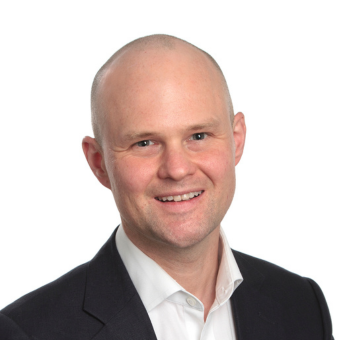
Dr James Whitworth
University of Cambridge
Dr Whitworth is studying special cases of Lynch syndrome that would be missed by standard genetic testing.
Further information
- Learn more about the projects we currently fund
- Read our FAQs on applying for a grant with us
- Find out more about involving patients in your research
We've been awarded AMRC's Expert Review Audit pass badge. This confirms that we use robust and rigorous research funding processes, helping us to fund the best research and driving better health outcomes for our community.