
Winter Wellbeing: Peripheral neuropathy
Wednesday 10 December 2025
The festive season can be a challenging time for people affected by bowel cancer. The longer evenings, colder temperatures and celebrations can be difficult to navigate whilst going through treatment. In particular, side effects like neuropathy can be triggered or made worse during the winter months.
What is peripheral neuropathy?
Peripheral neuropathy is a term that describes nerve damage that affects your extremities, like your hands and feet.
It's a common side effect of certain types of chemotherapy, which may cause symptoms like:
- Pins and needles
- Weakness
- Tingling or numbness in your hands and feet
- Loss of balance
The chemotherapy Oxaliplatin (Eloxatin®) is the most common cause of peripheral neuropathy in bowel cancer patients.
These symptoms can make it difficult to do everyday tasks like writing, picking up small items and walking. They can be triggered or made worse by the cold, which is why they’re more commonly noticed in the winter months when temperatures drop.
Why do people experience peripheral neuropathy?
People experience peripheral neuropathy because chemotherapy drugs target cells that grow quickly. This means that they can harm healthy cells as well as cancer cells. Peripheral nerve cells carry messages between the brain and the spinal cord and the rest of the body. If these nerve cells are damaged by the chemotherapy drugs, the messages can’t get through. This causes symptoms like numbness and tingling in the hands and feet.
You may develop symptoms during your chemotherapy treatment and for up to two weeks afterwards. The symptoms may improve once you finish treatment, but in some people, neuropathy can last for months or years afterwards.
Some people may develop symptoms after treatment has finished.
There is no way to tell if you’ll experience neuropathy or what your side effects from treatment will be, as everyone reacts differently.
If you start experiencing any neuropathy symptoms, it's important to tell your specialist nurse or healthcare team.
What can be done for neuropathy?
There are a few things that you can do both at home and with your healthcare team to help ease the symptoms you’re experiencing.
How is neuropathy treated?
Your healthcare team might suggest lowering your chemotherapy dose or changing your treatment. They may also be able to give you some medicine that can help manage any pain you’re experiencing. This is because common painkillers such as paracetamol and ibuprofen may not work for neuropathy.
What can be done at home?
Our amazing community has some suggestions below which can help to ease your symptoms at home:
- Taking food out of the fridge an hour before you need to handle it
- Keeping gloves by the fridge and freezer to use when touching cold items
- Avoiding cold drinks and ice cream in the first week after treatment
- Drinking plenty of warm drinks out of an insulated mug
- Using moisturising lotion on your hands and feet multiple times a day
- Practicing balance exercises and use a stick or crutch if numbness in your feet makes you unsteady
- Wearing bed socks at night — wool ones are especially warm
- Rubbing warming oil into your feet at night
- Wearing a big warm scarf or buff to protect your face from the cold
- Carrying rechargeable hand warmers with you

Tim’s story
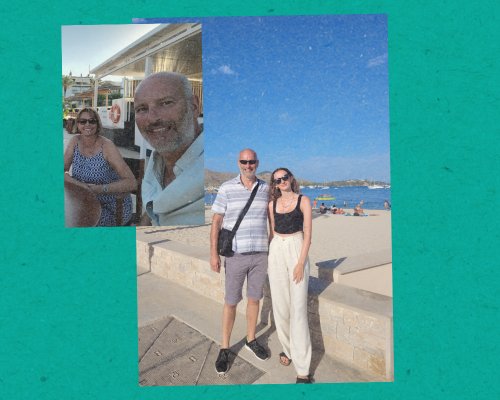
Someone who knows the true impact of neuropathy is Tim. Tim has generously shared his story with us about his experience of neuropathy, as well as his top tips for managing it. In autumn 2021, he was diagnosed with stage 3 bowel cancer. Tim’s route to diagnosis and treatment wasn’t easy and he underwent a combination of surgery and chemotherapy, which left Tim feeling “broken emotionally and physically”.
Tim found his chemotherapy particularly difficult, with him experiencing side effects including nausea and neuropathy.
Tim’s experience of neuropathy
Not long after Tim finished his chemotherapy, he started to develop blisters on the soles of his feet. After these had healed, he noticed that the new skin that started to form felt odd. Tim describes this as feeling ‘almost like scars after being burnt’. Gradually, the neuropathy symptoms he was experiencing kept increasing in his feet.
He found this odd, as during his treatment, the neuropathy he experienced was mainly in his hands and related to cold things or the weather.
Tim’s neuropathy and general fatigue hindered his return to work, with him only being able to work limited hours from home. He persevered through the symptoms as long as he could, but in September 2022 he finally spoke to a GP about them.
The GP gave him a thorough examination, blood tests and prescribed him with Pregabalin (a drug used to treat nerve pain), which after a few days helped to ease the symptoms.
Speaking about his experience of neuropathy, Tim has a positive outlook, saying: “I honestly took it as the lesser of two evils; to survive stage 3 bowel cancer far outweighs a slightly disruptive, often painful permanent side effect”
Tim’s advice for those experiencing neuropathy
“Keep mobile - sitting may give some initial relief but keeping your feet moving does help.
A foot massage machine may help but at times can become a little too much.
Invest in decent quality socks both in terms of cushioning and thermal benefits.
Colder weather also triggers the neuropathy in my fingers so again invest in gloves and remember to have them with you just in case.
It is often the hidden, silent consequence of treatment. Don't be afraid to talk/ask about it and seek help or treatment if it becomes unbearable.”
Seasonal support for you
This December, we're running a month-long campaign to highlight some of the common issues bowel cancer patients face at this time of year, like neuropathy. Follow our #WinterWellbeing campaign over on Facebook, Instagram, LinkedIn, X and TikTok.
We’re here to support you no matter what your experience of bowel cancer is. Find more information and the right support for you on our support for you page.