From a cancer nobody talked about to a conversation we all need to have
Monday 24 August 2026
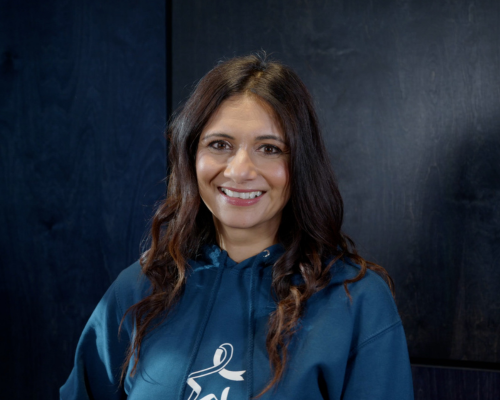
As part of our collaboration with Marks & Spencer on their 'Better With Beans' campaign, our ambassador, Dr Anisha Patel, took part in a live panel discussion. Here she reflects on her own story, the discussion and the importance of fibre in people's diets.
Eight years ago, in September 2018, I was diagnosed with stage 3 bowel cancer.
I was 39, a GP, a mum, and suddenly a patient facing an illness I had spent my career diagnosing in other people.
Very early on, I decided that if I could turn something so negative into something positive, I would. I wanted to talk about bowel cancer, raise awareness and hopefully make things better for the people diagnosed after me.
Back then, bowel cancer often felt like the cancer nobody really wanted to talk about. Bowels, poo, bleeding and changes in bowel habits weren’t exactly everyday conversation.
How times have changed.
So much of that change has come from people prepared to speak openly, including the incredible Dame Deborah James, whose campaigning helped change the national conversation around bowel cancer.
For those of us fortunate enough to survive this disease, many of us want to carry that work and messaging forward.
And this felt like a very special opportunity to do exactly that.
Better with Beans
I was incredibly proud to join the M&S Better with Beans panel, bringing together people with very different perspectives but one shared goal: to help people understand why fibre matters and how we can make eating more of it achievable. And my ultimate passion project, to get fibre on the menu of the nation.
I joined Grace Ricotti, Head of Nutrition at M&S; Cara Hoofe, M&S colleague and bowel cancer survivor; Rachel Mederson from Bowel Cancer UK; and colleagues from M&S.
What made the discussion so powerful was hearing the issue from different perspectives.
We heard Cara’s lived experience as a bowel cancer patient; Bowel Cancer UK’s perspective from years of supporting patients and campaigning for change; Grace’s expertise in nutrition and the potential for a major retailer to influence what ends up in our shopping baskets; and I was able to bring my experience both as a GP advising patients about prevention and as someone who has personally heard the words: “You have bowel cancer.”
Why are we talking so much about fibre?
UK adults are advised to aim for 30g of fibre every day, yet the NHS estimates that the average adult currently eats only around 20g a day.
That leaves plenty of room for improvement.
And when it comes to bowel cancer, those extra grams matter.
A 2011 BMJ systematic review and meta-analysis of 25 prospective studies found that each additional 10g of total dietary fibre consumed per day was associated with around a 10% lower relative risk of bowel cancer.
It is thought that 1 in 4 cases of bowel cancer are due to low fibre diet.
That’s an association rather than a guarantee for any individual, but it reinforces something we have known for a long time: eating plenty of fibre is an important part of reducing our risk of bowel cancer.
One of my biggest messages from the panel was this:
Fibre doesn’t need to be fancy, expensive, overwhelming or complicated.
You don’t necessarily need expensive supplements, powders or the latest fashionable “gut health” product.
Some of the best sources of fibre are ordinary foods we can add to meals we already eat:
- Beans and pulses - baked beans, kidney beans, black beans, butter beans, chickpeas, lentils and peas
- Wholegrains -wholemeal bread, wholewheat pasta, brown rice, oats and higher-fibre cereals
- Vegetables - fresh, frozen and tinned all count
- Fruit -particularly when you eat the skin where appropriate
- Potatoes with their skins on
- Nuts and seeds
- Popcorn
- Hummus, made from fibre-rich chickpeas
- Carrots and other crunchy vegetables
- And yes, dark chocolate contains fibre too
The key is variety.
My top tips for eating more fibre
You don’t need to completely overhaul your diet overnight. In fact, small changes throughout the day can really add up.
1. Make some simple swaps
Think:
- White bread → wholemeal or wholegrain bread
- White pasta → wholewheat pasta
- White rice → brown rice or another wholegrain
- Lower-fibre cereal → porridge or a wholegrain cereal
- Peeled potatoes → skin-on potatoes
- Fruit juice → the whole fruit
2. Don’t automatically peel everything
Where it’s safe and appropriate to do so, leave the skins on fruit and vegetables.
Think apples, pears, carrots, new potatoes and baked potatoes. It’s an incredibly simple way of keeping more fibre in your food.
3. Add beans and pulses to meals you’re already cooking
You don’t necessarily need a completely new recipe.
Add lentils to a Bolognese, kidney or black beans to chilli, chickpeas to a curry or salad, beans to soups and stews, or simply have baked beans with a jacket potato.
You can even replace some of the meat in a familiar dish with beans or lentils.
4. Rethink your snacks
Snacks can be another opportunity to sneak in some fibre:
- Popcorn
- Carrot or vegetable sticks with hummus
- A piece of fruit
- A handful of unsalted nuts or seeds
- Berries with yoghurt
- Oatcakes or wholegrain crackers with hummus
- A little dark chocolate
5. Think about adding rather than taking away
Healthy eating messaging can sometimes feel like a long list of things we’re not supposed to eat.
Instead, ask:
“What could I add to this meal to give me a little more fibre?”
Could you add some beans? A handful of peas? Some berries? Seeds on your breakfast? An extra vegetable? Swap to the wholegrain version?
One change doesn’t have to provide all 30g. It’s what you eat across the whole day that matters.
6. Increase fibre gradually
Going from a relatively low-fibre diet to 30g overnight may leave you feeling bloated, windy and uncomfortable.
Increase it gradually and give your gut time to adjust.
And remember to drink enough fluid as you increase your fibre intake. Fibre absorbs water, and adequate fluid helps it do its job.
If you have a condition affecting your digestive system, speak to your healthcare professional or dietitian before making significant changes to your fibre intake.
Making the healthier choice the easier choice
Perhaps one of the biggest things I took away from the discussion is that public health messaging can’t simply tell people what they should do.
It has to help people understand why it matters and how they can realistically do it.
That’s why collaborations like Better with Beans matter.
Because by bringing together healthcare professionals, people with lived experience, charities, nutrition experts and organisations capable of reaching millions of people, we have a much greater opportunity to create meaningful change.
Eight years ago, I wanted to turn my negative into something positive.
Sitting on a panel openly talking about bowel cancer, poo, fibre, beans and prevention with one of Britain’s biggest retailers, I couldn’t help but reflect on how far we’ve come.
There is still plenty of work to do.
But every conversation helps.
And sometimes, making a difference really can start with something as simple as a tin of beans.