
Five top tips for recovery and safe return to movement and exercise after bowel cancer surgery and treatment
Thursday 1 May 2025
Jane is a Pilates instructor and movement professional, in 2020, her husband was diagnosed with stage 3 bowel cancer. She shares how she used her expertise to help him return safely to movement and her top tips for anyone going through something similar.
In 2020, my husband was diagnosed with stage 3 bowel cancer. He underwent chemoradiation, bowel surgery (including a stoma) and more chemotherapy. Then just six months later, we got the devastating the news the cancer had returned and was in his lungs — more surgery and more chemotherapy followed. It was a very tough time in our lives.
Fast forward to today, and he's cancer-free, fit and active. But it has taken time, resilience and determination to regain his fitness and confidence in his body. Getting back to movement and exercise safely was a challenge as his body felt like it had been hit by a truck and he was shuffling round the house like an old man. He was fatigued from the chemotherapy and worried about doing his body some damage if he just jumped straight back into exercise. As a Pilates instructor and movement professional, I used my knowledge of movement and expertise to help him re-build step-by-step.
These are the five key lessons we’ve learned about recovering from bowel cancer surgery and safely getting back to movement and exercise.
1. Listen to your body – healing takes time
Your body has been through a lot and you're adjusting to your guts and bowels working differently now. This all takes time. It’s important to let your body heal and not put it under undue stress from over-exertion.
If you’ve recently had surgery, or you're feeling depleted due to chemotherapy, start gently. Gentle walks (5-10mins is a great start point) are excellent for starting to get you back on the road to recovery. If you're not that stable on your feet, ask someone to keep you company. Get outdoors if you can, it'll help your mental health too.
Build your walking up gently — if you have a day when a walk leaves you feeling wiped out, take it more gently for a couple of days. When you feel better you can progress your walking and try to get out every day. A couple of shorter walks in the day can be more manageable than one longer walk.
At this stage avoid any heavy lifting.
Try to include rests in your day.
2. Restore your core foundations
Your body probably feels like it has been hit by a truck! Bowel surgery affects the abdominal muscles so core work is important. Take the time to practise core restore exercises — they'll encourage blood flow and healing. Work on rebuilding from the foundations up; restoring your core function will help with back pain, feelings of tightness after surgery, and also prevent injuries, including hernia.
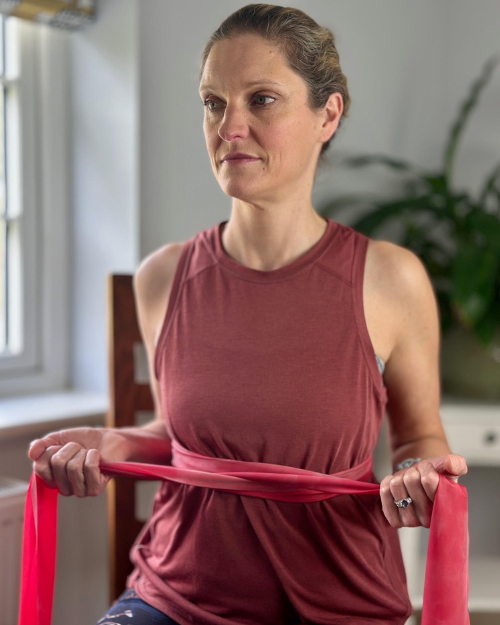
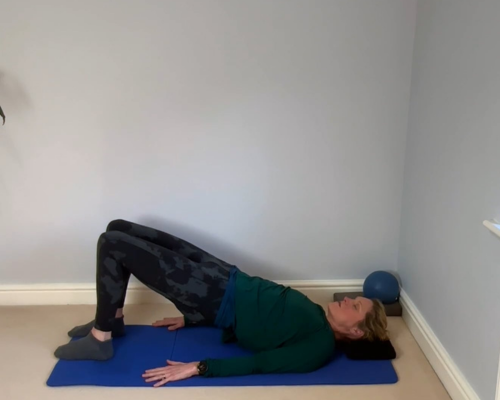
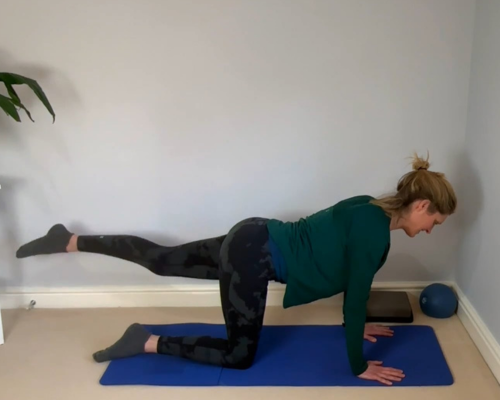
Focus on fundamental core restore exercises — start with breathwork, pelvic tilts, single knee folds, single leg slides. In the early days and weeks, avoid exercises that put a lot of pressure on your abdominals such as ab curls or planks. (You can get back to these over time but don’t start here!)
It'll be different for everyone but six to eight weeks of core restore exercises should help you to start to feel re-connected to your core and from there you can start to progress your core exercises. It’s never too late to embark on a core restore programme!
For guidance on breathwork you can watch my video here.
 |
 |
3. Rebuild slowly and know recovery isn’t linear
Cancer treatments and surgery can cause fatigue and muscle loss. Return to exercise needs to be gradual to avoid injury.
There'll be frustrations along the way as you recover from bowel cancer. Days your bowels are unpredictable, or you don’t feel confident in your body. On these days, pause and rest.
Be patient, stick to your core restore exercises and walking until you are feeling stronger.
An example of safe exercise progression might look like:
Week 1:
- three to four days post surgery start gentle breathing, core restore and pelvic floor exercises
- Start gentle walking – 10 minutes twice a day depending on how it feels
Week 2:
- Continue with the exercises and start to increase your walking to 15 minutes twice a day and then to 20 minutes twice a day (if tolerated).
Weeks 3 to 4:
- Progress to gentle core exercises and start some mobility and stretching exercises
- Continue to progress your walking building up to 40 minutes per day. Include some moments of more brisk walking if it feels ok
Weeks 5 to 8:
- Continue as above. You might feel able to start to make a gradual return to everyday activities such as gardening or light housework. You might also feel ready to start exercise such as jogging or swimming or Pilates but keep sessions short (20 minutes) and monitor how you recover. If you're wiped out for the rest of the day, reduce and return to weeks three to four for another fortnight.
Weeks 8 to 12:
- Continue with core, pelvic floor and breathwork.
- Gradual return to your activities. Continue to monitor recovery and include rests as needed. Listen to your body and regress or pause as needed.
Looking to get back into running? Try my “Reclaim Your Run” Pilates session.
4. Manage your bowel and stoma health
If you have a stoma, adjusting to movement and exercise requires extra care and probably a bit of planning. Likewise, if you experience bowel irregularities post-surgery, you may need to modify your routine.
Tips for exercising with a stoma:
- Wear a supportive stoma belt for comfort
- Stay hydrated
- Keep a food journal to identify triggers before workouts. It might be you time your exercise and movement so it’s before you eat
Managing bowel function post-surgery and post-reversal:
- Avoid high-impact activities if experiencing urgency or diarrhoea
- Strengthen your pelvic floor muscles to support bowel control
- Time your meals to avoid discomfort during exercise
- If you use medications, such as loperamide, to help regulate your bowels, you might adjust your dose and when you take it. Be prepared for some trial and error!
With the right adjustments, most people can return to a full range of activities after bowel surgery.
5. Look after your emotional and mental well-being
Recovering from bowel cancer isn’t just a physical process — it’s an emotional one too. My husband had to deal with body changes, fatigue, muscle loss and concerns about movement and injury and these are common, so it’s important to address your mental health as part of your recovery.
Ways to support your mental well-being
- Join a support group: Connecting with others who’ve had similar experiences can be empowering. Bowel Cancer UK has lots of options for forums and social media groups.
- Talk to a counsellor or therapist: Don’t underestimate how helpful it can be to speak to a mental health professional.
- Practice mindfulness or meditation: Helps manage stress and boost overall well-being.
- Celebrate small victories: Whether it’s walking a little further or regaining strength, acknowledge your progress.
Healing is a process, and every step forward—no matter how small—is an achievement.
Final thoughts: take it one step at a time
Looking back, I’m amazed at how far my husband has come. From those early days post-surgery to now being cancer-free — it’s been a long road. But through patience, movement and a focus on both physical and mental health, he’s regained strength and confidence.
Key takeaways from our journey:
- Healing first, exercise later—patience is crucial
- Strengthen the core safely to prevent complications
- Start with gentle movement and build up slowly
- Adapt workouts to bowel changes or a stoma
- Mental health matters—support is essential
If you or a loved one are on this journey, know this: You will get there. One step at a time.