20 years of progress on bowel cancer screening: what comes next?
Monday 17 August 2026
This year marks 20 years since bowel cancer screening was first introduced in the UK. Since then, all four UK nations have established screening programmes. These programmes have evolved as new evidence has emerged.
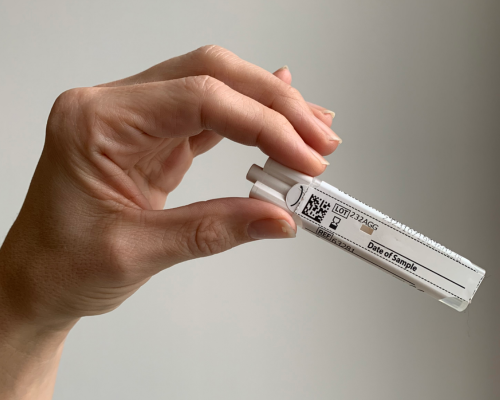
Screening now uses the more accurate faecal immunochemical test (FIT), the screening threshold has been lowered to help spot more cancers, and people are now eligible for screening from the age of 50, although Northern Ireland's programme currently still starts at 60. Each of these changes has meant more cancers caught earlier and more lives saved.
Across the UK, bowel cancer screening programmes are informed by recommendations from the UK National Screening Committee (UK NSC). The UK NSC independently reviews evidence on whether screening is safe, effective, and represents a good use of NHS resources.
As we reflect on 20 years of progress, attention is now turning to what should happen next. There’s a live debate about whether we should screen people earlier in life, particularly as cases in younger people continue to rise. This debate isn’t just about screening more people, but improving patients’ lives while making the most of NHS resources.
Our Senior Policy Officer, Sarah Milne, explains what the evidence currently tells us and what action can be taken now.
Scotland: a case in point
Scotland is where this question is playing out most right now. In July 2026, the Scottish Government wrote to the UK NSC requesting a review of the screening age threshold, prompted by Public Health Scotland research showing a rise in bowel cancer among under-50s. It’s also committed to piloting screening in younger people if the UK NSC declines to carry out a review.
At this stage, nothing has changed for people in Scotland. Asking for a review is not the same as introducing routine screening for people under 50, and there are no plans for this kind of change in England, Wales or Northern Ireland.
There are ongoing challenges with the current screening programme, and these aren't unique to Scotland. Not everyone who's invited to take part in screening does so, uptake varies across different communities, and offering prompt follow-up tests after a positive screening result is still a challenge.
Any proposal to expand Scotland's bowel cancer screening programme would need to be considered alongside current evidence, the potential pros and cons of screening, the impact on health inequalities, and whether NHS services can deliver it safely and effectively.
Should bowel cancer screening start before the age of 50?
Bowel cancer remains much more common in older adults, but around one in 20 cases occur in people under the age of 50, and that number is rising.
Some countries, including the United States and Australia, have introduced routine bowel cancer screening from the age of 45. However, these countries have different healthcare systems, different capacity and different approaches to managing the risks associated with increased screening. Their experiences are important to learn from, but they cannot simply be applied to the UK.
Based on current evidence, routine screening of adults under 50 is not recommended in the UK. Research is ongoing, and we welcome efforts to better understand whether screening younger people could improve outcomes in the future.
Why does the evidence matter?
Bowel cancer screening saves lives. More than nine in 10 people survive bowel cancer when it is diagnosed at the earliest stage, compared with fewer than one in 10 when diagnosed at the latest stage.
The UK NSC currently recommends bowel cancer screening every two years for people aged 50 to 74, using the FIT at the most sensitive threshold that can be delivered safely. This is based on independent reviews of whether screening detects more cancers, whether the benefits outweigh the harms, and whether the NHS has capacity to deliver it.
Because bowel cancer remains relatively uncommon in younger adults, expanding routine screening would mean testing many more people to detect comparatively fewer cancers. This would increase demand for follow-up tests and expose more people to the potential anxiety and risk associated with them, even though most people with a positive FIT result will not have bowel cancer. This is why any change must be weighed carefully, not ruled out.
What should happen next?
We welcome continued research into early-onset bowel cancer and positive public and political engagement with this issue. This includes looking into whether screening people based on their risk rather than just their age could improve outcomes for younger patients.
Any new approaches need to be supported by clear evidence, independently evaluated, and transparently reported. They must also be backed by investment in diagnostic capacity, without reducing access to fast diagnosis for people already experiencing symptoms of bowel cancer.
Across the UK, we need to:
- increase awareness of bowel cancer symptoms among younger adults and encourage people to contact their GP if something doesn't feel right
- improve screening uptake, particularly among communities where participation is lower
- work towards using the most sensitive FIT threshold that can be delivered safely
- increase diagnostic capacity in line with demand
- improve identifying and monitoring people at higher risk
- ensure that younger people with symptoms receive fast testing and diagnosis
- invest in research into early-onset bowel cancer and the potential benefits and harms of screening younger adults.
We’ll continue to work with decision-makers across the UK so that any future changes to bowel cancer screening are backed by clear evidence, reduce health inequalities, and lead to the best possible outcomes for patients.
People of any age experiencing symptoms of bowel cancer should contact their GP. Bowel cancer is treatable and curable, especially when diagnosed early.
Read more
Explore the links below to find out more about bowel cancer, the screening programme, early diagnosis and on research into early-onset bowel cancer.
- Know the signs and symptoms of bowel cancer
- Find out how bowel cancer screening works and who is eligible
- Find out how diagnosing bowel cancer earlier saves lives
- Support our campaigning to improve bowel cancer outcomes
- Get involved in early-onset bowel cancer research