Bonnie Sims, Hertford
I was diagnosed with stage 1 bowel cancer and Lynch syndrome in May 2025
In 2002 my dad died of bowel cancer at the age of 42. Since his death I was warned to be careful of bowel cancer as it seemed to be a generational hit on my dad’s side. Early 2023 my sister from my dad’s first marriage got in contact with me through social media and said she had a non cancerous tumour removed from her bowel and she tested positive for Lynch syndrome. She advised me to get tested too.
I reached out to my doctor’s and they referred me to the genetics hospital. They wrote to me but I was working away and by the time I responded they said they had closed my referral and to reach out to my GP for a new one.
Later that year I started experiencing fatigue and some stomach pains that felt like period cramps. I went back to my GP in October 2023, which they did another referral to Genetics and sent me for a tummy scan. My tummy scan came back clear. Genetics sent through a questionnaire in which I needed more details from my sister. My sister was in Jamaica at the time and couldn’t give me the information until a month later. Again, it was too late for Genetics to deal with me and advised again to get re-referred by my GP.
By August 2024 my fatigue was bad. I had to lay down in the work toilets nearly several times in a day just so I could function. This made my anxiety worse. I also had pains in my stomach area which had got worse and spread. I had a clear jelly discharge from my back passage. I went back to the doctors in November 2024 and I asked to see a different doctor. This new doctor asked me to do a FIT test, which I did. Four days later the doctors called me and said traces of blood was found and I needed an emergency colonoscopy. I then had the colonoscopy on 5 December 2024. A 7mm polyp was removed and I was told it was nothing nasty, but if it was, I would know in a weeks’ time.
Weeks went past and I assumed no news was good news, but I still had a bad feeling about it.
At the end of January, while I was on a work course, I received a call from the hospital, and they said the polyp removed in December was cancer. After that my mind disassociated. I suddenly felt extremely scared and wanted to plan for the worst case.
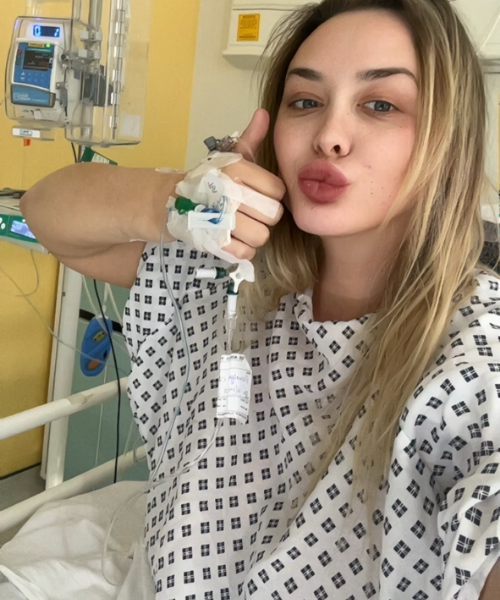
The waiting was the worst. Between February and April I had to wait for stage 4 cancer to be ruled out, as something was found on my liver – this turned out to be a bit of fatty tissue. I needed surgery to determine if I had stage 1, 2 or 3. NHS waiting time for surgery was two months. Luckily, I had private healthcare through work, which I was able to use for surgery. April, I had the surgery where they removed majority of my bowel – this was a current and preventative action, as the specialists at St Mark’s Hospital in London were sure I had Lynch syndrome. They also removed my Lymph nodes.
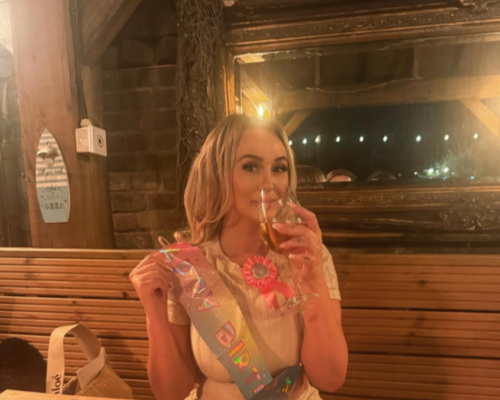
In May, two weeks before my 30th birthday, I was told there was no other tumour found in my bowel or lymph nodes – diagnosing me as stage 1 as well as testing positive for Lynch syndrome (loss of MHL1 and PMS2). I am beyond grateful to be in remission from bowel cancer. But I do have Lynch syndrome, which there is no cure for. So, I am working with my genetics team and the Lynch syndrome team to work on an IVF course, which will do embryo selection to ensure my child does not develop the same disorder as me, and prevent chromosome issues. I am working with the teams to carry out a hysterectomy, after I have finished my family, to prevent endometrial and ovarian cancer – which I am at a higher risk of due to the Lynch syndrome.
I want to make people and doctors aware that young people can get cancer and we need to be treated the same as someone older. I want people (younger and older) to tune and listen to their bodies and feel heard by their healthcare support. I want people to know, even when the cancer is physically gone, it still leaves a lasting impact on our mental and physical state. If something does not feel right within your body, please use your voice and speak with your doctor until you’re heard. Cancer does not discriminate - it’s important to listen to your body to help get the cancer early.