Alice Roderick, Kent
I was diagnosed with stage 3 bowel cancer in November 2025, at the age of 33.
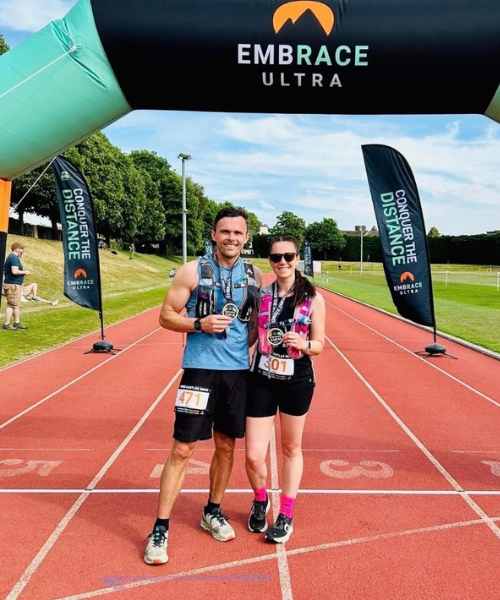
The year before I was diagnosed was a busy one. My husband and I got married. We were really into our fitness and had completed an ultramarathon. We were preparing for IVF treatment. And on top of all of this, my job as a nurse in the intensive care unit of my local hospital kept me working all hours with shift work. I was tired, but I felt like I had more than enough reason to be.
I’d had some intermittent bleeding in the past, which I put down to haemorrhoids. But as we looked to start IVF treatment, something told me to go to the doctor. I just wanted a clean bill of health.
A shock diagnosis
I visited my GP, who gave me treatment for haemorrhoids, as expected. I assumed it would be a straightforward fix – something that would clear things up and get me back to feeling healthy again. But I really struggled painfully with the suppositories, to the point I eventually went back to the doctor. He suggested a qFIT just to be sure but reassured me that it probably wouldn’t be anything to worry about.
My qFIT score came back as more than 200, which triggered a referral to the bowel team. Despite this, I still wasn’t worried. Even before the colonoscopy, my doctor said the investigation was mainly precautionary because I was so young and fit.
But everything changed when she began the examination. I was told very swiftly afterward that it looked like something sinister. From there I was referred for a CT scan and an MRI.
One of the hardest parts of this time was the waiting in between scans and results, and the time that gave me to think. I felt like I was living someone else’s life: I’d just got married, was the fittest I’d ever been, and was trying to start a family. How could things have changed this quickly?
I was told I had bowel cancer over the phone: it was a three-way call between the nurse, my husband and me. I had so many questions, and I was invited to the hospital to ask them all that same afternoon.
It was just as horrible hearing my diagnosis when we eventually got to sit down with the nurse a few hours later. But she was excellent and had all the time in the world for us to ask the mountain of questions we had.
Pre-treatment IVF
Over the coming weeks, a plan was put in place to tackle the cancer. I’d have 25 sessions of radiotherapy alongside tablet chemotherapy, followed by more chemotherapy and surgery. All of this was more than likely to push me into early menopause, so I was offered one cycle of IVF.
Due to where I was in my cycle, we had nine days to work with a fertility clinic and get my eggs collected. It was either in nine days, or not at all – I simply didn’t have time to wait for my next cycle, and the upcoming Christmas closure of the clinic would have delayed things even further. We managed it and we now have three frozen embryos. It helped me process what was about to happen a bit better. It’s a weird thing to say, all things considered, but I felt very lucky.
Going through treatment
I started radiotherapy a few days before Christmas. And I don’t think my feet really touched the ground after that – I was just swept along, going through the motions of all this gruelling treatment.
My radiotherapy was five days a week, for five weeks, with chemotherapy tablets alongside. It was very intense and tiring. I kept telling myself to aim for halfway and that it would be downhill from there. But when I got to halfway, I found I didn’t feel that sense of relief I was hoping for. All the cumulative effects of the radiotherapy had just left me really worn down.
Accessing the Bowel Cancer UK forums and real-life stories gave me some comfort. I kept reminding myself that every person’s journey is different, but it was reassuring to be able to read about other people on similar journeys to mine.
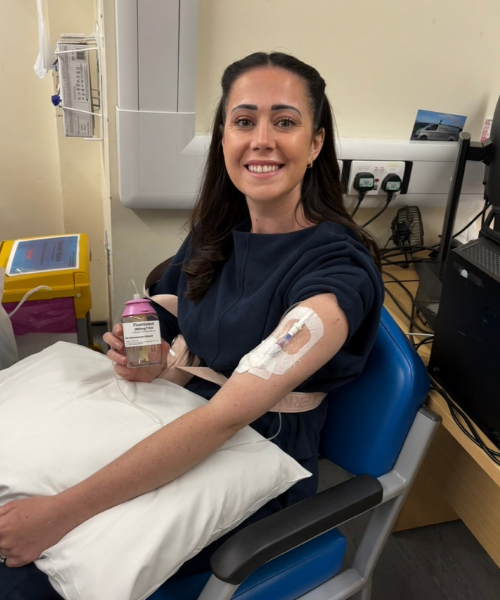
After radiotherapy, I had six cycles of chemotherapy. This was one of the hardest parts. I struggled a lot with side effects – vomiting, diarrhoea. On top of this, I had a lot of anxiety and brain fog. I just felt like I was on another planet.
I ended up in the hospital a few times. Eventually my doctors switched out one of the medications that was making me so poorly. I got through it, but it left me incredibly worn down.
Finding myself post-treatment
I’ve been told it looks like I’ve had a complete response to my treatment, which, when I was first diagnosed, was all I wished for. But almost a year into this journey, I can see why so many people in similar situations struggle during this post-treatment phase. I went from being someone who had never really had anything medically wrong with her, to having nine months of my life planned out, day by day, and now I’m living with a lot less structure than I’m used to.
I know I can speak with the bowel nurses if I need to, and they’ve been excellent. But my body is now going through the menopause, which feels very foreign. On top of this, I do feel like there’s a sense of grieving the future I thought I was going to have – as well as being a little fearful for the future ahead of me.
That said, one thing that does bring me a sense of relief is just how quickly I was diagnosed. I’ve read about people, especially younger people, having to go back and forth to the doctors to try and find answers. Every doctor I saw took me seriously. I dread to think when I would have been diagnosed if I was told that it was just haemorrhoids. It could have been a completely different situation.
I’m slowly trying to ease my way back into my exercise. The gym absolutely wipes me out, but it does feel good to be getting back into the hobbies I loved pre-diagnosis.
To anyone reading, my biggest advice is just to just bite the bullet and get checked out. Nothing is too embarrassing to speak with the doctor about. It could save your life.