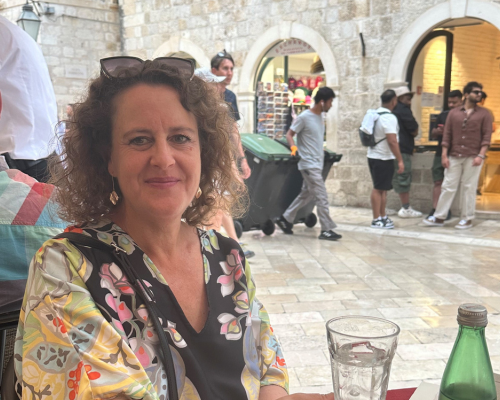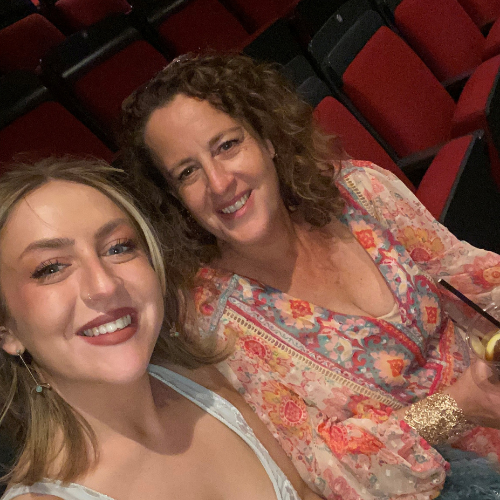
Debbie Bate, Essex
I was diagnosed with stage 1 bowel cancer in January 2024, aged 52.
After multiple GP visits over many years I was back at the surgery in July 2022. Bloods showed iron deficiency but normal CEA and FIT. I was told neither the iron deficiency nor the rectal bleeding needed following up. I wasn’t examined or referred for a colonoscopy and I felt like I was being a nuisance.
On 11 January 2024 the situation came to a crisis point when the tumour prolapsed. I rang 111 and was told to go to A&E. The nurse tried to dissuade me from being examined, saying “it’s not very nice” and apologised to the doctor for having to do the examination. I was told everything felt normal and to see my GP if I remained concerned. I was and I did. I saw a new GP at 9am the following day. She examined me, felt the tumour immediately and referred me to the two-week-wait pathway.
I had a phone consultation and then a colonoscopy on 29 January where I was told I had cancer; MRI, CT and liver ultrasound followed.
I expected my first “cancer” appointment on 15 February 2024 to confirm staging and a treatment plan. However, although the MRI suggested stage 1, my liver enzymes were described as “deranged” and the CT and liver ultrasound were inconclusive. I needed a liver MRI and also a sigmoidoscopy to get clearer pictures; two tumours had already been identified, they wanted to rule out a third.
So, I didn’t know if I was stage 1 or stage 4. I was carrying the uncertainty of two potentially very different futures. A few weeks later it was confirmed that it was stage 1. I was relieved but a close friend had died from rectal cancer two years earlier. He too had been diagnosed at stage 1.
I received the results of a Subject Access Request and learned that my tumour was mucinous and dMMR. From my own research I knew that rectal dMMR tumours were showing remarkable responses to the immunotherapy dostarlimab. However, at my oncology appointment I was told immunotherapy was only available to stage 2 and 3 patients. Because my cancer was stage 1 and mucinous dMMR tumours respond poorly to chemotherapy or radiation, radical surgery was the only treatment offered.
This was the hardest part of the journey for me. We rightly emphasise the importance of early detection, but in my situation being diagnosed early didn’t mean gentler treatment or better outcomes. More advanced patients were able to receive immunotherapy and mostly avoid surgery, while my only option was surgery where 70–90% of people experience some level of bowel dysfunctions and about half develop Low Anterior Resection Syndrome (LARS). To me it felt unethical and I've found that very difficult to come to terms with.
I was also referred for genetic testing for Lynch syndrome and told that if it were positive they would recommend a hysterectomy and potentially remove the entire colon. However, the initial rectal surgery could not be delayed.
Surgery was scheduled for 19 March 2024. I had four days to come to terms with things, so I squeezed in two fun days out before bowel prep.
My surgeon is a very clear and empathetic communicator, which helped tremendously. After surgery he came to the ward to explain the operation had been more complicated than anticipated and I would never be the same. From a cancer perspective, however, he was very happy. I felt huge compassion for him having to deliver that news; I knew he would have done everything he could to achieve the best outcome.
I’m currently coming up to my two-year surveillance CT. I have a small “nodule” in the rectovaginal space which could be scar tissue or endometriosis. They can’t be 100% certain it's not recurrence but are not concerned right now.
I accept that waiting for results will feel rough at times and deliberately plan for that. Once you’ve had a lot of practice at holding uncertainty you become good at getting through tough times.
At two years on, I know I’m still in the period when recurrence is most likely, but that fear isn’t always at the front of my mind anymore, and I'm grateful to have a surveillance nurse who is both caring and competent.
I'm now labelled “unexplained dMMR” because my genetic testing was inconclusive. This means my future cancer risk is uncertain; higher than the general population, but lower than someone with confirmed Lynch syndrome.
At first, to have some life with LARS I carried a radar key and spare clothes, avoided eating away from home and only went places with good toilet facilities. My remaining bowel was named Cecil, so it might be “Cecil is pretty calm, we can grab some lunch,” or “Cecil is really not great, I’m going to head home.”
At six months, when my bowel function hadn’t recovered, I requested a referral to St Mark’s. I had already tried medication and diet. St Marks tried pelvic floor exercises but I didn’t see improvement and iron tablets made things worse. I asked to try trans-anal irrigation (TAI). Total game changer. It takes time each morning, but it has given me back the ability to leave the house feeling comfortable and without fear and to eat and drink when I’m out too. I’ve even flown multiple times.
A stoma is always an option if TAI becomes too much, but for now I’m managing.
Recovery was further complicated by fatigue, likely caused by low iron, low zinc and ongoing pain. An MRI in November 2025 incidentally revealed adenomyosis. It had probably always been present but appears to have been woken up by surgery. I include this because other women may experience unexplained pain or bleeding after surgery. It took more than a year of advocating, and another two-week wait pathway, before the adenomyosis was identified. Treatment remains uncertain because the usual cure is hysterectomy, but I've been advised that further pelvic surgery is not recommended unless it's lifesaving.
There are a few things I’d like to be taken away from my story.
Firstly, don’t be afraid to keep pushing if something doesn’t feel right, even when tests come back “normal”. There’s rightly a big push encouraging people to see their GP if they have symptoms and that early detection message is vital. But we also need to make sure that when people do reach out for help, they have somewhere safe to land.
Secondly, when Catherine, Princess of Wales spoke openly about not being able to return to normal straight after treatment, it helped. I’d like more education around the real impact of cancer, on patients and people closest to them. There can be pressure to bounce back once treatment ends, but cancer doesn’t end when treatment does. Some people don’t feel like celebrating; that’s ok. Recovery can be slow, messy and emotionally complicated. We don’t need to pack away fear, loss and exhaustion so everyone else feels comfortable.
If you’re newly diagnosed, or supporting someone who is, you’re allowed to feel scared, angry, exhausted, grateful and hopeful all at the same time. Ask questions. Bring someone to appointments. Write things down. Plan for the rough times — watch your favourite comedian and eat cake at 3am if it gets you through a night drowning in the dreads.
Finally, advocate. I advocated for trans-anal irrigation, an iron infusion, early colonoscopy access for my daughter, appropriate treatment for adenomyosis and acknowledgement of the missed opportunities in my care.
I don’t have certainty and I'm permanently disabled but I do have moments of ordinary life again and those matter. There are increasing stretches of time when I genuinely forget that I have/had cancer.
If my story helps one person feel less alone, more confident about speaking up or relief on hearing there is life with LARS I will be pleased.