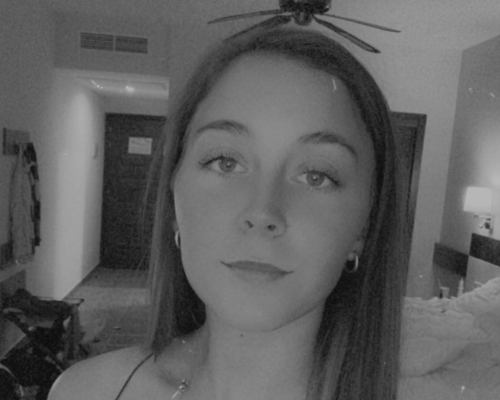
Nicky, West Sussex
I was diagnosed with stage 1 bowel cancer in August 2025 at the age of 24.
I'm a young woman who has always been independent. Growing up, I faced challenges that meant I had to grow up much faster than many people my age. As a result, I became someone who just gets on with things and deals with whatever life throws at me.
I work in a demanding public-facing role and enjoy helping other people. Like most people in their twenties, I was focused on building my future and living my life. I never imagined that bowel cancer would become part of my story.
Initial problems
I first noticed bleeding from my back passage when I was around 22 or 23 years old. At first, it was only on the toilet paper. Because of my age, I didn’t think it could be anything serious. Over time, the bleeding continued, and I started noticing blood in my stools. I also experienced bloating, excess gas, bouts of sickness and changes in my bowel habits.
I contacted my GP surgery about my symptoms. Rather than being offered an appointment to discuss them in person, I was asked to complete a stool sample. After submitting the sample, I wasn’t contacted to discuss the results or my ongoing symptoms. Instead, I later discovered through the NHS app that the results had been reported as normal.
My symptoms continued for another year and gradually became worse. Deep down, I knew something wasn’t right.
An important change
When I was 24, I booked another appointment with a different doctor. It was one of the best decisions I made. He listened carefully to my concerns, examined me and explained that he could not feel any haemorrhoids. I showed him photographs of blood clots I had passed and explained the changes in my bowel habits. He arranged further investigations. My repeat stool tests showed my markers had increased significantly compared to the previous year and I was referred for a flexible sigmoidoscopy.
Before the procedure even started, I remember the consultant looking at me and saying that I seemed too young to be there. He suggested my symptoms were likely caused by haemorrhoids, dismissing me to the point where I thought ‘Am I not meant to be here?’.
During the procedure, I could see the screen and noticed a large polyp. I remember asking whether that could be the source of the bleeding I had been experiencing, but I was told it was more likely to be inflamed haemorrhoids.
A 15mm polyp was found and biopsied. At the end of the procedure, I was told that it didn't appear to be cancerous, but that it would be sent away for routine testing. I left feeling relieved.
A shocking surprise
A few weeks later, I attended what I believed would be a routine follow-up appointment. I genuinely thought I would be discussing conditions such as IBS or Crohn’s disease and what investigations might happen next. Instead, I was told that the biopsy results showed the polyp was cancerous.
Hearing the word ‘cancer’ was frightening because I wasn’t expecting it at all. I had gone into that appointment believing I was discussing routine results, not receiving a cancer diagnosis. I was only 24 years old and had already been reassured that the polyp did not appear to be cancer. The consultant who told me it was cancer was the one who did my colonoscopy and was so dismissive of me. He said he was shocked too, but bowel cancer is in the rise in young people. I was then referred for CT and MRI scans to determine whether the cancer had spread.
The waiting between scans and results was one of the most difficult parts because of the uncertainty. At the same time, I wasn’t someone who sat and worried constantly. Once I knew what I was dealing with, I wanted to focus on the next steps and what needed to happen.
Undergoing treatment
Following my diagnosis, I underwent a full colonoscopy where the polyp was removed. They had initially left the polyp in there to see if there were any more polyps within my colon.
I was offered surgery to remove part of my bowel where the polyp had been found. After discussing the options with my medical team, I decided not to proceed because I was told there was only a small chance that the cancer had invaded the bowel wall. The team agreed too.
I also underwent CT and MRI scans. Thankfully, there was no evidence that the cancer had spread. Further biopsies from the site where the polyp had been removed showed no remaining signs of cancer.
Mentally, the uncertainty was the hardest part. Waiting for appointments, scans and results felt endless.
I’ve always been someone who gets on with things and tries not to stress about situations I can’t control. That mindset helped me throughout my diagnosis and treatment. Rather than focusing on worst-case scenarios, I tried to focus on the next step in front of me.
Where I am now
I'm currently under surveillance and will continue to have regular CT and MRI scans for the next five years. Thankfully, there has been no evidence that the cancer spread, and follow-up biopsies have shown no remaining signs of cancer. I feel incredibly fortunate that my cancer was found at Stage 1 before it had spread.
I’m now awaiting genetic testing after learning more about my family’s medical history. It made sense due to there being a lot of bowel cancer within my family, and my having bowel cancer already at 24. There’s the possibility that I may have Lynch syndrome, which is very scary to think about.
The experience has changed my perspective, but I still try to live my life positively. I don’t spend too much time worrying about things I can’t control. Instead, I focus on enjoying life and making the most of the future.
The support I had
The doctor who listened to my concerns and arranged further investigations made a huge difference. Once I was diagnosed, my medical team guided me through the scans, biopsies and treatment options available to me. Once they knew it was cancer I wasn’t dismissed. I was seen as someone who can get bowel cancer, even as a young person.
My family offered to come to appointments with me, but I chose to attend them on my own because I felt I could handle it myself.
I was fortunate to have supportive friends around me. One of the things I appreciated most was that they understood me well enough not to constantly ask if I was okay. They knew I preferred to get on with things as normally as possible and that if I needed support, I would ask for it.
I did use Bowel Cancer UK’s bowel cancer chats, but there weren’t many young people on there to have conversations with.
More awareness needed
Since my diagnosis, I have learned more about my family’s medical history. Because I am estranged from my father, I didn't have access to information about his side of the family while growing up.
Only recently did I discover a significant history of bowel cancer within my wider family. This has highlighted to me that many people who are estranged from family members, adopted or have grown up in care may not know important information about inherited health conditions.
I believe there needs to be greater awareness of inherited cancer risk and better support for people who do not have easy access to their biological family’s medical history. There needs to be a big change in terms of this, as early prevention is the best outcome.
My main message
My biggest message is that bowel cancer does not only affect older people. If you experience symptoms such as rectal bleeding, blood in your stool, changes in bowel habits, bloating or ongoing digestive symptoms, don’t ignore them because you think you’re too young. Please make sure you advocate for yourself or have family do this on your behalf if you are not being listened to.
I also want young people, especially young women, to feel confident speaking up if something doesn’t feel right. Symptoms should be taken seriously regardless of age.
Trust your instincts. You know your own body better than anyone else. If your symptoms continue, keep asking questions and don’t be afraid to seek another opinion.
Early diagnosis saved my life, and it could save someone else’s too. I hope sharing my story encourages other people to seek help sooner than I did.