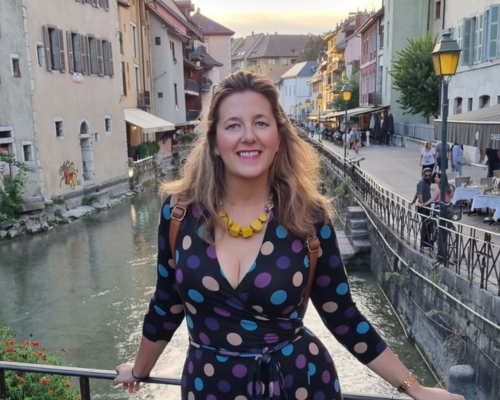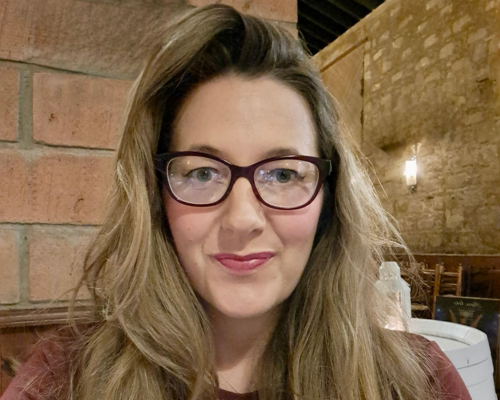
Elise Sargent, Hampshire
I was diagnosed with stage 4 bowel cancer in January 2025, aged 44.
In January 2025, I went from being healthy and happy to being faced with a stage 4 bowel cancer diagnosis almost overnight. It was a Friday afternoon and I was getting ready to go away for the weekend when I suddenly started to feel unwell.
The pain in my abdomen became excruciating so I went to A&E and explained that I’d had sporadic episodes of blood in my poo over the previous year. They sent me away with laxatives, but I wasn't prepared to accept that and went to a second hospital.
Fortunately, they did a scan and could see a large tumour blocking my bowel and a worrying lesion in my lung. Just after 1am I was told that it looked like I had stage 4 cancer. Within hours I had emergency surgery to place a stent in my bowel to allow me to go to the toilet. Further scans revealed there was also cancer in my liver, lung, peritoneum and ovaries.
Everyone around me was absolutely devastated but I was convinced I would be fine in a few months. The enormity of it didn’t hit me for several weeks — perhaps it was my brain’s way of protecting me.
Intensive treatment
When I met my oncologist for the first time and they explained surgery was not an option and chemotherapy would only be palliative, I was completely crushed. For the drugs to work, they need to be able to grab hold of the protein in the cancer and really dig in to fight it. Tests showed that I have KRAS; a gene that controls how cells grow and divide. When it's mutated, it can become permanently switched on, leading to uncontrolled cancer growth. About a third of people with colorectal cancer have this mutation. It makes it very hard to treat. Immunotherapy and most targeted treatments simply won’t work for me, so my options are very limited.
Last year I had almost 600 hours of chemotherapy which was hard and it made very little difference to the size of my tumours but did manage to stop it from progressing. Even still, an amazing surgeon believed I was operable.
In October 2025 a team of surgeons spent 16 hours removing part of my bowel and left lung, over 50% of my liver, my womb, ovaries, cervix, uterus, fallopian tubes, omentum and gallbladder. They then scraped my peritoneum and poured hot chemo into my abdominal cavity where it was washed around for several hours to target the very hard-to-reach peritoneal disease.
The recovery was absolutely brutal but remarkably quick and I didn’t need a stoma. I was looked after so well and in January I was back at work as a journalist.
Sadly, less than three months after my operation, the cancer returned significantly. I’m now preparing for another six months of a different type of chemo with an added drug called Avastin which was licensed by the NHS in December 2025. I’m really hoping it will keep it under control for a while.
‘Everything is going to be okay’
Although I have accepted the fact I have an incurable disease that will dramatically shorten my life, I can’t shake the feeling that everything is going to be okay. It’s in my nature to be optimistic, even in the bleakest of circumstances! My family and friends have never wavered in that belief either, which keeps me going.
Another thing that has really helped me is exercise. Very early on I was put in touch with a physiotherapist who specialises in exercise medicine. Every day she sent me targeted workouts, even when I was having chemo. I ended up fitter when I finished my treatment than when I started. It not only helped with side effects. It also boosted my mood.
After every fortnightly treatment ended I had reflexology, and a full body massage once a month, which was heaven. Although I was absolutely shattered, I made myself do one lovely thing every week. Whether that was a concert, the theatre, a party, dinner with friends, I did it even though I could only stay for an hour most of the time. Just a taste of real life was enough to keep me smiling.
Counselling has been a godsend. The Bowel Cancer UK Stage 4 Facebook group has also helped me so much. Whether it’s an obscure question about treatment side effects, or if you need a handhold because you’re scared of what’s ahead, there’s a group of people out there who are going through this extraordinary journey too and will have some answers.
My main message
Throughout my life I’ve grabbed every experience open to me. I’ve trekked the Himalayas, sky dived in New Zealand, hiked up Mount Fuji — I’ve never, ever said no to something because it was a bit scary. There isn’t anything I feel I’ve missed out on and it’s been so full of love.
So now that I know my time is limited, I don’t want to do big bucket list experiences. All I want to do is enjoy the small, everyday things with the people I adore. Laughing around the dinner table with my family, swimming in the sea, dancing with my nieces, picking sweet peas from my garden, discovering new music, getting funny messages from my girlfriends in the middle of the day that have me doubled up in fits of giggles. Things that may seem ordinary, that I’ve always taken for granted, I absolutely treasure, and I want as many of them as possible because I don’t know how many more there will be.
I wish I had queried the blood in my poo the very first time it happened. I would urge anyone in the same position to go straight to their GP.
My focus is on the epidemic of bowel cancer in the under-50s. Because I so desperately want to know why I’m ill, I volunteer for every research group I find. If by telling my story it can change the outcome of someone else’s, what I’m going through won’t have been in vain. That is why Bowel Cancer UK is so vital.