Daniel Edwards, Southwest London
I was diagnosed with stage 3 bowel cancer in October 2024, aged 42.
Looking back, my stomach had not been right for a while, nothing dramatic and no obvious red flags but my bowel habits had changed. I was going to the toilet more often and my digestion felt inconsistent. I was bloated but I just assumed it was stress, my diet or IBS.
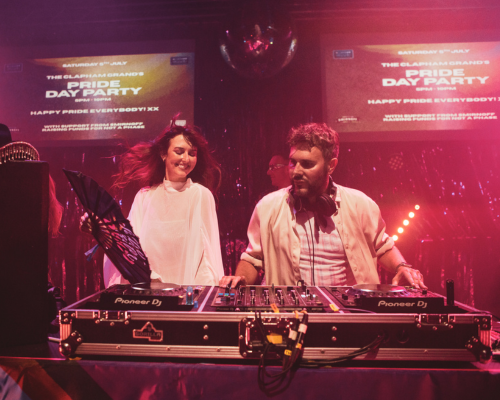
I was also very tired. But I had a demanding corporate job and DJ’d most weekends, and it was all explainable, so I blamed that.
As a gay man who grew up in the 80s and 90s, my health anxiety had always centred around HIV. That was the narrative drilled into us and cancer was never part of the conversation. I was 42, had no family history, and genuinely believed bowel cancer was something that happened to older people.
Eventually, in September 2024, I went to my GP thinking it might be IBS. A blood test showed severe anaemia. That was the first moment something felt properly wrong. I was referred urgently for a colonoscopy. It took place on 12 October 2024, on my 42nd birthday.
During the procedure, the consultant could not get the camera past a tumour in my right colon. Two weeks later, I was told I had stage 3 bowel cancer. A 10cm tumour that had spread into nearby tissue and lymph nodes. At that point it was considered inoperable.
The waiting period between being told I was anaemic and receiving the cancer diagnosis was one of the hardest parts. I knew something serious was going on but didn’t know what. I spent hours on the Bowel Cancer UK forums during that time. Reading other people’s experiences helped me understand what scans meant, what staging meant, and what questions I should be asking. It made the unknown feel slightly more navigable.
The cancer diagnosis was shocking and very scary. I had just secured the biggest promotion of my career and was due to start the following week – it couldn’t have come at a worse time. I felt scared, of course, but I went into problem-solving mode. What is the plan? When do we start? What are my options?
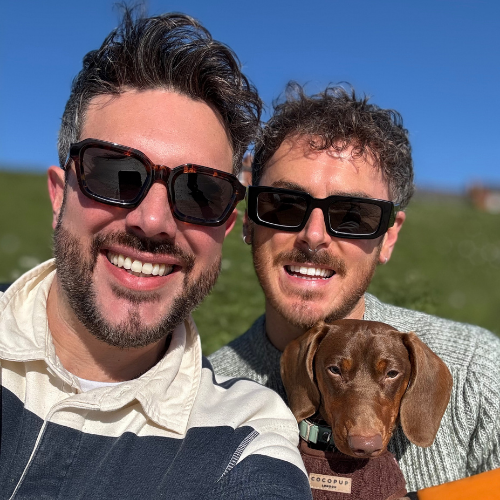
I worried about my partner Harry. We had only met a couple of years earlier. I felt guilty about what this would put him through. There was also frustration. I had symptoms for months and I had explained them away.
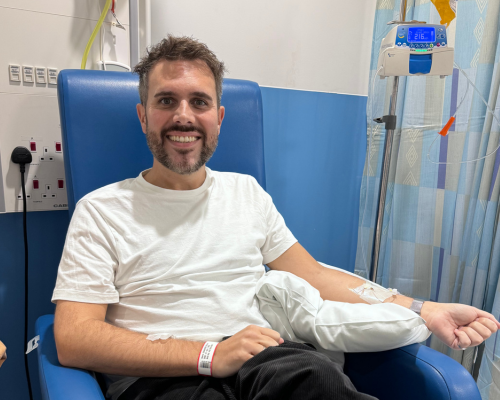
Because of the specific biology of my tumour, I was offered immunotherapy rather than chemotherapy. I started pembrolizumab quickly. The tumour responded very well. Scan by scan it shrank. My doctors described it as an exceptional response, which felt surreal given that I had initially been told it was inoperable.
Treatment was not straightforward. I developed inflammation in my lungs caused by the immunotherapy and was prescribed high-dose steroids. The steroids affected my sleep and my mood significantly. It was unsettling and exhausting.
On 24 March 2025, after immunotherapy had done its work, I had major bowel surgery at St George’s Hospital in Tooting. A third of my bowel was removed. The tumour had attached to my duodenum but surgeons were able to remove the affected tissue. They removed 51 lymph nodes and all were clear, which was attributed to the immunotherapy.
Being told there was no evidence of disease was one of the most emotional moments of my life.
Physically, recovery from major bowel surgery is hard. Energy takes time to return. Your digestion changes. Your body feels different. Even now I have to manage my energy more carefully.
Mentally, cancer leaves a mark. The fear does not disappear neatly once treatment ends. Scan anxiety is real. Living beyond cancer is complicated. You're grateful to be here, but you're also more aware of how quickly life can change.
Seeing other LGBTQ people talking openly about cancer mattered. Representation is not a small thing. When you belong to a community that already faces health inequalities, feeling seen within the cancer space makes a difference.
As a gay man, I'm aware that LGBTQ people are less likely to engage with screening and more likely to delay seeing a GP. We often do not see ourselves reflected in mainstream health campaigns. That gap is part of why I now speak about this openly.
I'm under regular surveillance and continue to have scans and blood tests and see my oncologist every three months.
I returned to work on a phased basis and am now fully back in my new role. I do approach things differently now and prioritise differently. I'm still speaking to a therapist on a bi-weekly basis to unpack what happened to me emotionally.
In May 2025, Harry proposed while we were on holiday in Turkey. We're getting married in Brighton in 2027. After everything that happened, planning a wedding feels significant. It feels like reclaiming the future.
I was very lucky with the people around me, and I know that not everyone gets that.
Harry was steady from the moment we were told. He came to every appointment he could, sat through scans, listened carefully, asked questions when I didn’t have the energy to, and never once made me feel like I was carrying it alone. Bowel cancer strips away dignity in ways people don’t talk about, especially when it involves major surgery. There are moments where you feel physically and emotionally exposed. He handled all of it with love and calm. It deepened our relationship in a way that only something like this can.
My family were solid and practical. My brother-in-law had previously lost his first wife to bowel cancer, so he understood the territory. He didn’t overwhelm me with information or worst-case scenarios. He let me set the pace of those conversations, which meant a lot.
My friends, my urban family, were incredible. These are people I’ve built my adult life with through work, music and years of shared experience. They showed up in ways that felt instinctive rather than dramatic. Messages at the right time. Sitting with me when I needed company. Keeping things normal when I wanted distraction. Letting me talk when I needed to process things out loud and not forcing it when I didn’t. When you’ve built your life in chosen community, that kind of support is everything.
I didn’t go through this on my own. That is something I carry with a lot of gratitude.
In July 2025, I organised a fundraiser called Silly Bowel Disco. Around 300 people came together and we raised over £4,400 in one night. We raffled signed toilet seats and mixed humour with serious messaging. More important than the money were the conversations. People told me they had booked GP appointments after hearing my story.
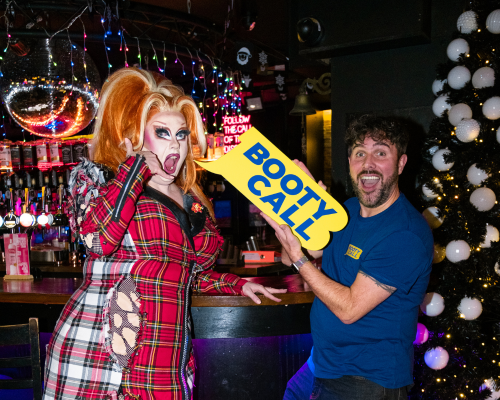
That night became the seed for Booty Call CIC (www.bootycallcic.org)
Booty Call uses joy, humour and unapologetic queer visibility to take cancer awareness into LGBTQ spaces. Clubs. Pride events. Grassroots community venues. The message is simple. Do not ignore changes in your body. Speak up. Get checked.