
Chemotherapy
Chemotherapy is a treatment that uses drugs to kill cancer cells. You may have chemotherapy to treat bowel cancer, either alone or together with other treatments.
This page describes how chemotherapy treats bowel cancer and which drugs are available.
All treatments carry the risk of side effects, and the most common ones are listed here. During treatment, you will need to use contraception to prevent pregnancy and to protect any sexual partners from the chemotherapy.
Who has chemotherapy?
If you have very early stage bowel cancer (stage 1), you will not normally need any chemotherapy. Some patients with stage 2 bowel cancer will have chemotherapy after surgery to help reduce the risk of the cancer coming back. This isn’t needed for all patients with stage 2 bowel cancer.
Most patients with stage 3 bowel cancer will be offered chemotherapy after surgery to help reduce the risk of the cancer coming back. If you have advanced bowel cancer that has spread to other parts of the body (stage 4), you might have chemotherapy before or after surgery or in combination with other types of treatment.
Timing of chemotherapy
Doctors give chemotherapy as a course of treatment, made up of several treatment cycles. Each treatment could take a few minutes, hours or sometimes days. You usually have chemotherapy every two to three weeks depending on which drugs are used. Each two to three week period is called a cycle. Ask your healthcare team how long each treatment cycle will last and how many cycles you will have.
You will usually have a scan every two to three months to see if the treatment is working.
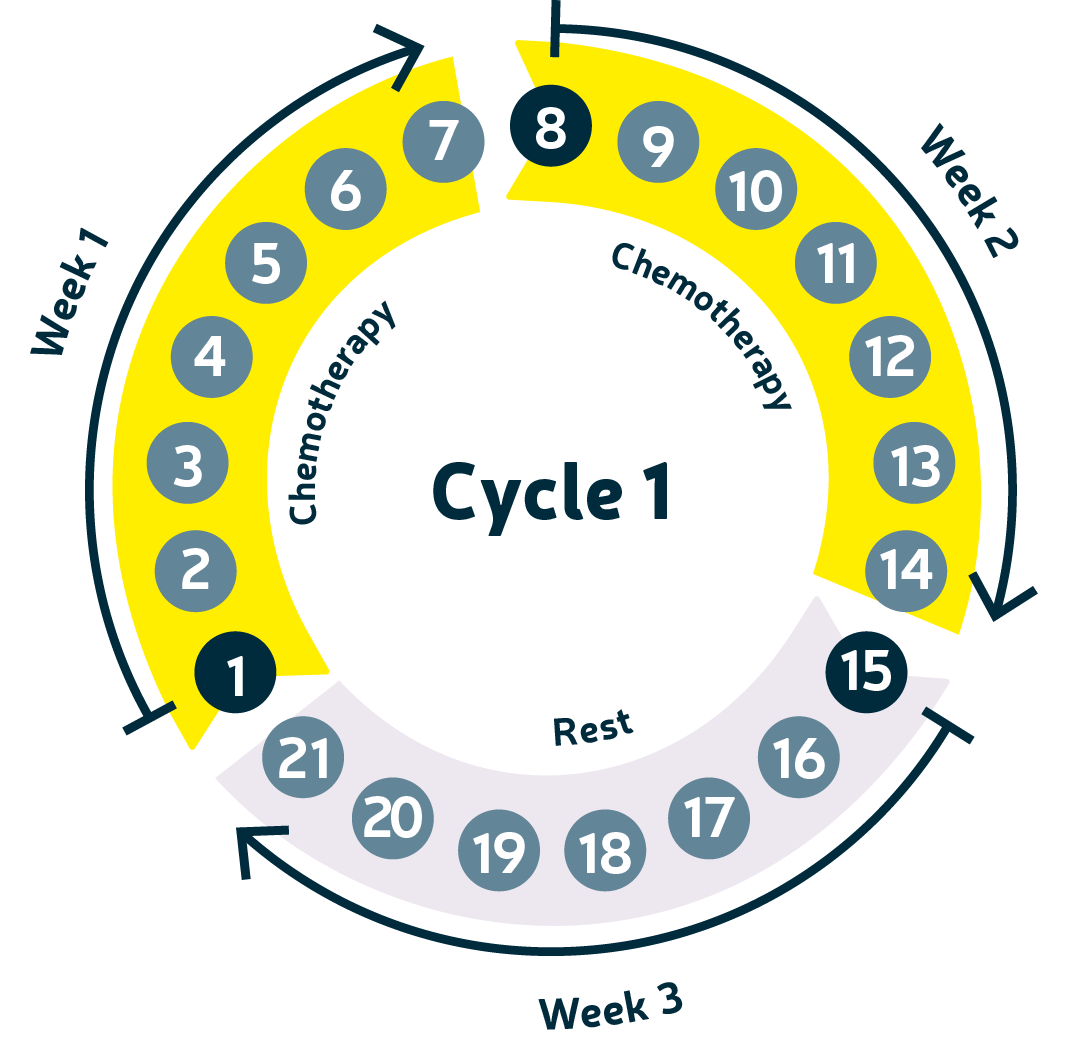
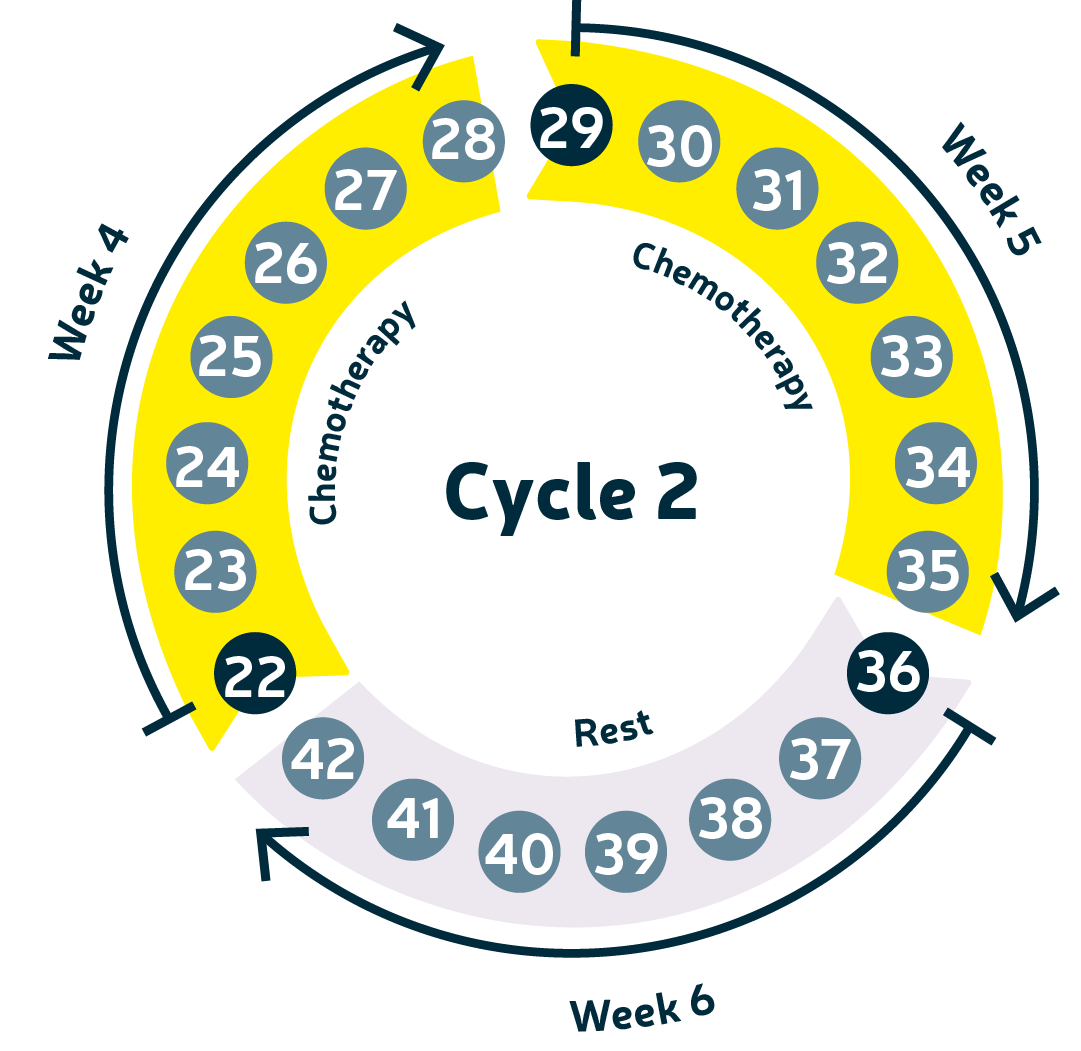
If you have cancer that has spread to the lymph nodes, you may have chemotherapy together with radiotherapy (chemoradiation) to shrink the cancer before surgery. This is called neoadjuvant chemotherapy.
You may have chemotherapy after surgery if the cancer has spread to the lymph nodes or if there is a high risk of it coming back. This is called adjuvant chemotherapy.
If your cancer has spread to other parts of your body, you might have chemotherapy to keep the cancer under control or ease symptoms. This is called palliative chemotherapy. It aims to keep you active for as long as possible and may also prolong your life. You may have palliative chemotherapy for several years. Some patients have such good responses that the cancer can be removed with surgery.
You may have surgery to remove the cancer if it has only spread to a few small areas of your liver or lungs. You may have chemotherapy before and after this surgery to shrink the cancer and make it easier to remove.
Macmillan Cancer Support and Cancer Research UK have detailed information on how chemotherapy works and how to prepare for treatment.
Chemotherapy drugs
You will have chemotherapy as an injection, drip or infusion into your vein (intravenous) or as a tablet (oral).The most common chemotherapy drugs are:
Fluorouracil (also known as 5FU)
Pronounced: floor-oh-yoor-uh-sil
Fluorouracil is a common chemotherapy treatment for advanced bowel cancer. It is usually given as an infusion through a tube into a vein. You will be given it in cycles which might be repeated every week, every two weeks or every month. It is often taken with folinic acid. Folinic acid isn’t a chemotherapy drug but can help the chemotherapy treatment work better.
Capecitabine (Xeloda®)
Pronounced: ka-pe-site-a-been
The body absorbs capecitabine and converts it to 5FU. You may take capecitabine before or after surgery or to treat bowel cancer that has spread to other parts of the body. Capecitabine is taken as a tablet twice a day.
Oxaliplatin (Eloxatin®)
Pronounced: ox-ali-plat-in
You may have oxaliplatin after surgery or to treat bowel cancer that has spread to other parts of the body. Oxaliplatin is taken as an injection or drip into a vein (intravenously) and can take between two to six hours.
Irinotecan (Campto®)
Pronounced: i-rin-o-te-can
Usually irinotecan is given together with 5FU and folinic acid. This combination is called FOLFIRI. This drug treats bowel cancer that has spread to other parts of the body. Irinotecan is taken as an injection or drip into a vein. The treatment can take between 30 to 90 minutes and occur every two to three weeks. It can be taken on its own or with other treatments if you can’t have fluorouracil.
Raltitrexed (Tomudex®)
Pronounced: ral-tee-trex-ed
Raltitrexed is given to patients who have bowel cancer that has spread to other parts of the body. It is taken as an injection or a drip into a vein and takes about 15 minutes.
Trifluridine-tipiracil hydrochloride (Lonsurf®)
Pronounced: try-floor-i-deen-ti-piruh-sil hy-druh-claw-ride
You may have Lonsurf if you have bowel cancer that has spread to other parts of the body. Trifluridine-tipiracil hydrochloride is taken as a tablet twice a day, in 28 day cycles.
Chemotherapy combinations
You might be given more than one chemotherapy at the same time. Some common combinations used to treat bowel cancer include:
- FOLFOX: Folinic acid, Fluorouracil, Oxaliplatin
- FOLFIRI: Folinic acid, Fluorouracil, Irinotecan
- FOLFOXIRI: Folinic acid, Fluorouracil, Oxaliplatin, Irinotecan
- CAPOX or XELOX: Capecitabine, Oxaliplatin
- XELIRI: Capecitabine, Irinotecan
Side effects
Each chemotherapy drug or combination has its own side effects. Your healthcare team will give you information about the side effects that are most likely to affect you. Common side effects of chemotherapy include:
- loose bowel movements (diarrhoea)
- an increased risk of infection.
- a sore mouth
- feeling and being sick
Chemotherapy can cause temporary or permanent infertility, depending on the drugs and doses used. Speak to your healthcare team if you have any questions about fertility.
Click here to learn more about chemotherapy side effects.
If you have bowel problems or sickness, you may also find our information on diet helpful.
Contraception
You should use a condom if you have sex in the first few days after having chemotherapy. This will protect your partner from any chemotherapy that may be in the semen or vaginal fluid.
Both men and women should use contraception during chemotherapy and for about a year after treatment ends. This is because these treatments can damage sperm and eggs or harm a developing baby.

More information
Cancer Research UK provides Information on chemotherapy to treat bowel cancer.
Macmillan Cancer Support provides information on chemotherapy and its side effects.
Updated June 2025
Next review June 2028
.jpg)

We're accredited as a Trusted Information Creator by the Patient Information Forum. This means the way we write our resources has been independently assessed as health information you can trust.